Free Thanksgiving Music from the Best Piano Book for Beginners 2025

Here’s to thinking about Thanksgiving piano music because it will be here before we’re ready!
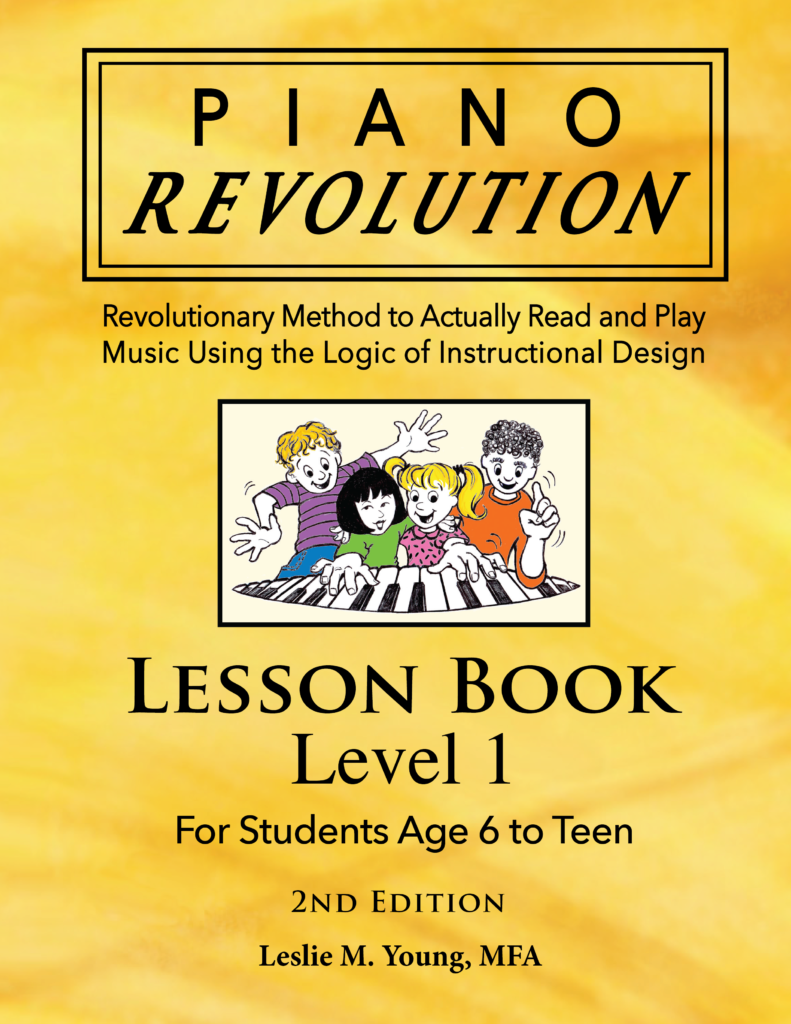
Included in the best piano book for beginners series is seasonal music, and the Thanksgiving selection is in a link below from Piano Revolution.
Also, here’s some things perhaps you didn’t know about the holiday:
Interesting Thanksgiving-Time Facts:
1. According to the Guinness Book of World Records, how much does the heaviest turkey on record weigh?
Answer: 86 pounds
Yes, you read that right — a whopping 86 pounds. According to Guinness, a turkey named Tyson who weighed 86 pounds was sold at a charity auction in London in 1989 for about $6,692. For comparison, a typical Thanksgiving turkey usually weighs around 15 pounds.
2. What did President Calvin Coolidge famously receive as a Thanksgiving gift?
Answer: A live raccoon
November 1926, Vinnie Joyce of Nitta Yuma, Mississippi, sent the 30th President of the United States a live raccoon to be served as Thanksgiving dinner. However, the President became so smitten with the furry animal that he pardoned it and adopted it as a pet. He named it Rebecca.
3. How many turkeys do Americans prepare each Thanksgiving?
Answer: 46 million
Thanksgiving without turkey would be like Christmas without a tree, and most American families wouldn’t dream of foregoing the almighty bird. While not super popular the rest of the year, turkey is a huge hit for holidays, probably because it can serve large gatherings. On Christmas, an additional 22 million families host an encore with their Thanksgiving turkey recipes.
4. What do Thanksgiving and the song “Mary Had A Little Lamb” have in common?
Answer: They were both created by the same woman — sort of.
Writer and editor Sarah Josepha Hale convinced President Abraham Lincoln to officially declare Thanksgiving a national holiday after three decades of persistent lobbying. The author also founded the American Ladies Magazine, which promoted women’s issues long before suffrage. She wrote countless articles and letters, advocating for Thanksgiving to help unify the Northern and Southern states amid gathering divisions.
Hale kept at it, even after the Civil War broke out, and Lincoln actually wrote the proclamation just a week after her last letter in 1863, earning her the name the Mother of Thanksgiving.
Back to Thanksgiving Piano Music
The Shakers were guided by core values of conviction, integrity, inclusion, and innovation. They were successful entrepreneurs known for their various manufacturing enterprises, their creation of beautiful objects that have fascinated generations of admirers, and their significant impact on modern design and architecture. In the 19th and 20th centuries, the Shakers made important contributions to religious thought, progressive causes, music, craft, agriculture, and industry.
Here’s a popular hymn associated with this religious group and just perfect for the month of November and Thanksgiving! This is a free download, but you can view the original in Level 3 for the Mature Student.


If you’re looking for the best piano book for beginners or a method that truly teaches students how to read music, you’re in the right place. I’m Leslie M. Young, author of the Piano Revolution series, a modern, research-based approach that helps beginners of all ages read and play real music from the very first lesson.

Why I Created Piano Revolution
Teaching Beginners to Read Music
Personal Reflection by Leslie M. Young, author of Piano Revolution
Leveled Piano Instruction Books in Four Series
Why It Matters


The writing and proving of the Piano Revolution books has been a decades-long journey for me. The longer I used the method as a teacher, the more frequently I saw the lasting benefits for students of various ages. This approach truly teaches learners—proven with ages 5 to 65—how to actually read and play written music from the very first lesson. It’s not just about pressing keys. It’s about unlocking literacy in music and having true independence at the piano.
Story about Actual Student #1

My new neighbor approached me about teaching her ten-year-old daughter piano. She had had two years of lessons previously, so I expected her to know quite a bit. I was so surprised to see she couldn’t read a single written note. So we started from scratch with my beginner lesson book 1. She said aloud each letter name as she played its key and used the spaces as starting points to find the line notes – using the Piano Revolution thinking method.
After three months, she was reading on a one-year level. This reaffirmed to me that its the method that makes the most difference in learning to accurately read and play music; not the teacher; not the age; not the piano; not past experience. This student continued and excelled beautifully.
Result: Method matters more than age or past experience.
Story about Actual Student #2
I met this lovely 65-year-old grandmother in 2017. She was quite active in many areas, but wanted to learn to play piano. I told this from-scratch beginner that if she practiced ten minutes a day using my first lesson book, saying each letter name as she played its key, she would progress quickly. She astonished me. After just four months, she played the original version (both hands) of Clementi’s Sonatina! Not quite up to speed, but accurately! She (and I) were quite happy with her accomplishments!
Result: The Piano Revolution method works for any motivated learner.
Story about the Frustrated Teacher
A very experienced piano teacher I know was having difficulty with a teen student who just was not making any progress. This student had come to her with a background of having had lessons for a few years, but he never made the connection between reading notes and locating their corresponding keys.
I could see this teacher’s frustration and heard her say perhaps the problem was with herself. I emphatically reassured her that was not the case. The issue was with the method book currently used and those previously used. They really were the same in their approach of orienting on middle C and using hand positions and finger numbers – just rote memorization.

I encouraged her to take a new approach. Start from scratch with my beginner book for older teens and adults. Just stop “cold turkey” with the hand positions and finger numbers and replace that with learning one hand/clef at a time and say each letter as its key is played. That is actual learning that cannot be faked by a student with a “good ear”.
Remind the student frequently that letters will not have to be said forever – just until solid long-term learning has occurred. That’s usually after lessons covering two books in the series. This teacher was certainly happier after our conversation, and I understand now that the teen has mastered notation-reading!
NOTE: The Piano Revolution method should be easy to use in homeschool lessons by parents with no music experience, as well as for self-teaching older students.
Backstory: The Power of Instructional Design
In 1982 I found a course at the University of North Texas to be most enlightening! It was about how Instructional Design principles can be used to teach anyone anything in a way that should practically guarantee successful learning. That one experience reshaped how I thought about teaching. It showed me that learning doesn’t have to be rote copying tied to hand positions and finger numbers—it can be logical, clear, and empowering. That’s exactly how Piano Revolution is structured – now.
I realized in the 1980s that just marking out most of the printed finger numbers in songs would not solve the root problem. Those songs were purposefully written in “hand positions” so that only certain notes would be read and certain piano keys played. A student has 10 fingers. A piano has 88 keys. Instant problem.

To alleviate this problem in the beginner’s first book, I searched for recognizable songs in the public domain that would fit my new “thinking process” strategy. This also meant new songs would have to be written to provide enough sequential progress for the student. There were years spent writing and rewriting.
Then something fantastic was created . . . the Internet! . . . and with it the capability for self-publishing books! New notation software – print on demand – no inventory – the book in your hand three days from ordering – amazing! This new “thinking process” method could be in the hands of teachers, students, and parents – all over the world.
The Thinking Process: Step-by-Step
- Learn each staff separately to understand treble and bass clefs clearly.
2. Identify spaces first, then use them to name and find line notes.
3. Practice short, daily sessions (10-15 minutes) to build automatic recognition.
4. Self-correct mistakes using the visual logic of the staff.
This process turns students into independent learners who can “figure it out” on their own—one of the most rewarding things a teacher can hear!The beginner learns each hand’s staff separately. This makes sense because each staff represents different portions of the piano keyboard—so that the lines and spaces of each staff have different letter names. After the spaces are gradually learned (and the location of their piano keys), the spaces are used to name and locate the line letter names and key locations, in a gradual and logical sequence.

This “thinking process” that the student acquires within a short time of repeated practice is exciting for a teacher to see in action and self-motivating for the students because they can self-correct any errors. I’ve had a student say, “I can figure this out myself, so why do I need a teacher?” That was very satisfying for me to hear!
The Method that Empowers Students to Teach Themselves

The evolution of structured teaching to read written music and perform it has spanned about 150 years. The Bertini Pianoforte Method of the 1880s was more like an encyclopedia of everything piano rather than a graduated method for beginners to learn to read and play – but it was a start. In the years after Bertini’s book appeared, other method books were published, including Beginners’ Book of the Oxford Piano Course in 1928 and John Thompson’s Modern Course for the Piano in 1942.
There are certainly more that followed, but current modern piano method books seem to be organized in the same general way as that of the 1880s: Systematically gathering beginner concepts together, leading to more difficult, and then the even more difficult – this IS the methodology.

Piano Revolution gives students independence. It teaches them not just to play by rote-copying, but to understand. Not just to perform, but to logically think.

Here’s a fun and short
cartoon video that shows the Thinking Process used in
Piano Revolution books:
What Would the First Lesson for a Young Student Look Like?
What Would the First Lesson for a 6 to Teen Look Like (video)?
View sample pages of all the books for students
ages 6 to teen:

View sample pages of all the books for students
4 to 5 years old:
View sample pages of all the books for older
teens and adults:
View the books on Amazon:


Any and all comments are welcome about the topics that are published. I will try to accommodate as many as possible in future articles – and thank you for your input!

About the Author, Composer, Illustrator,
Educator, and Eternal Optimist
Leslie Young is the author, composer, and illustrator of the PIANO Revolution method books (originally titled as the Revolutionary Piano Method). She co-founded a K-12th grade charter school in Texas and has been a piano teacher for over 40 years. She has had experience teaching a variety of students tackling piano for the first time or as returning students.
Young believes that “learning to play the piano is more about diligence and perseverance” – but would add that just as critical to success is the method that is used, the pattern of critical thinking, and the instructional principles that promote immediate success.
She states: “In teaching piano to students of varying ages, what also varies is a commitment of time and the amount of dedication. Children of younger ages may do very well with a parent as teacher; others may need someone who is not family to instruct them. Some older children and adults prefer to make progress on their own, and this method is designed to act as a meticulous guide through new material. Some adults and teens insist on professional teachers, which also encourages continuity.
Because these books are self-explanatory, a novice or experienced professional teacher will have no trouble using the PIANO Revolution method with students. It’s an easy and effective way to learn piano.”