Surprising Pianos that Are Truly Unique
Pianos that are truly unique are few in number, but these two really stand out. The Janko and the Giraffe – both are very unconventional and fascinating. Your students may appreciate their own piano even more! Then we’ll look at beginner piano books.
The Jankó Piano
The Jankó Piano is named after its creator, Paul von Jankó, Hungarian mathematician, engineer, and musician. He invented this extraordinary instrument with its unconventional keyboard layout in 1882.
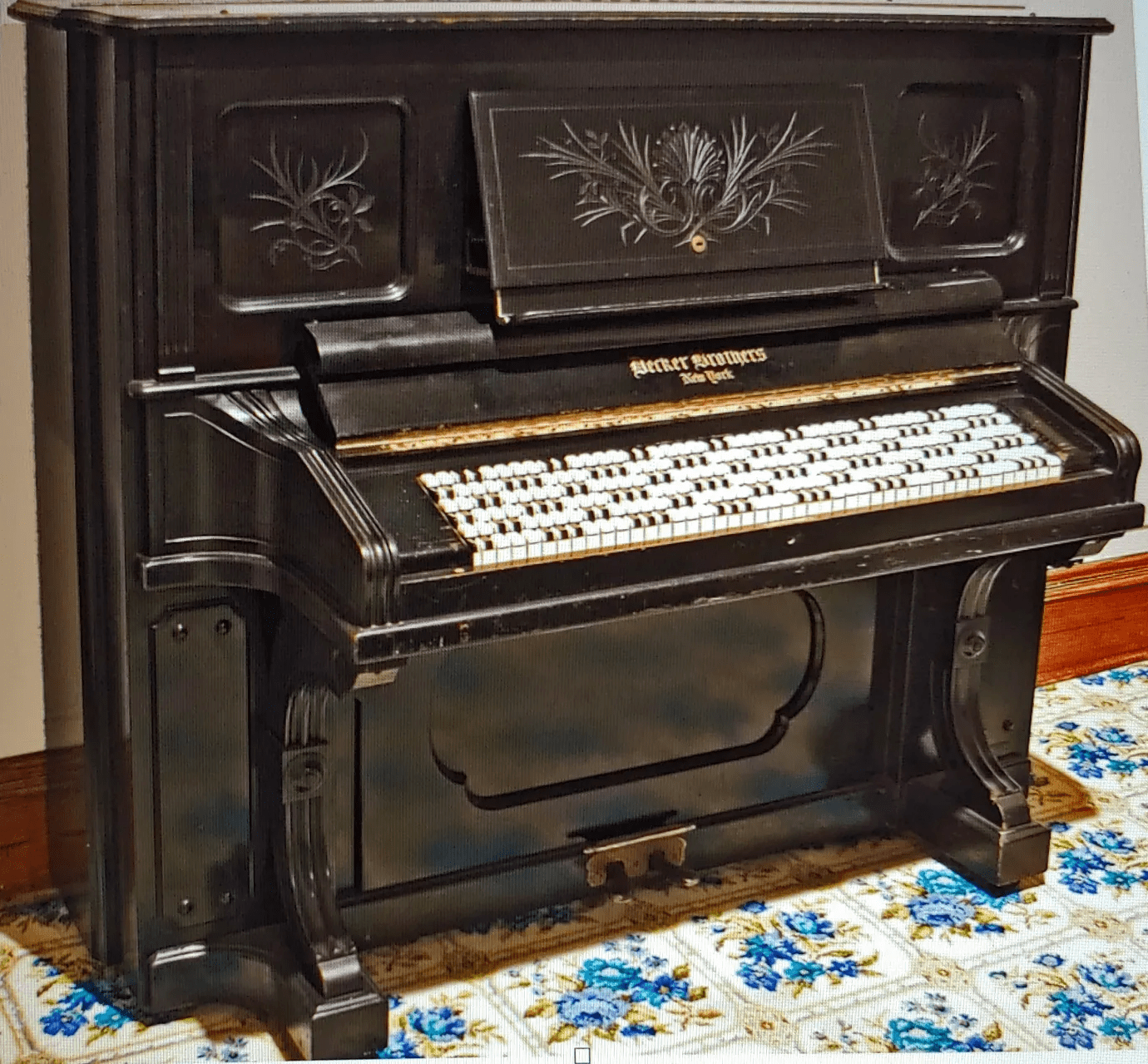
Unlike the traditional piano keyboard, the Jankó Piano features a patented key arrangement designed to enhance playing versatility and minimize the need for hand stretches and movement. Its six key levels with interlocking manuals made it possible to play scales in all keys using the same fingering; however, it makes my eyes hurt just looking at it.
Each note on the piano could therefore be played at three different, vertically aligned points on the keyboard, making it easier to reach larger intervals. This arrangement allows for easier execution of complex chords and harmonies, making it a sought-after choice for virtuosos seeking exceptional musical expression. https://artsandculture.google.com/asset/tQGl-ZRajmnRsA
The Giraffe Piano
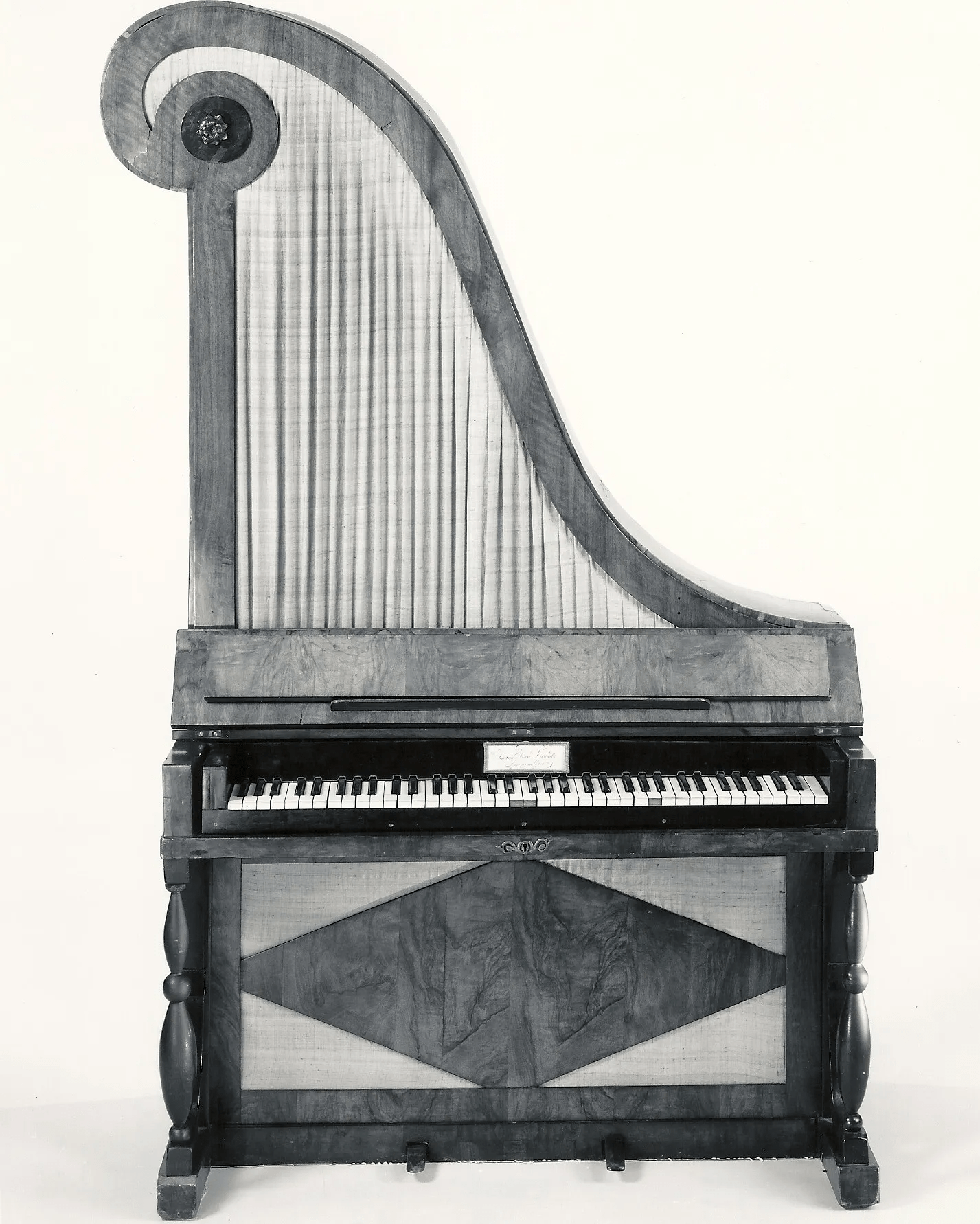
The Giraffe Piano, as its name suggests, stands out for its distinctive elongated shape. This peculiar design originated in Austria around 1805 but multiple inventors take the credit: Martin Suffer, Joseph Wachtl, and Jakob Bleyer.
The tall giraffe-like shape resulted from the desire to increase the resonance and tonal quality of the instrument. By elongating the soundboard and strings, the Giraffe Piano generates a more vibrant and resonant sound compared to traditional pianos. Its elongated design also adds an artistic flair to any performance space, making it a visual delight for both musicians and audiences.
https://en.wikipedia.org/wiki/Giraffe_piano#/media/File:Upright_(Giraffe)_Piano_MET_225363.jpg
Why Are These Pianos Important?
Both the Jankó Piano and the Giraffe Piano are significant examples of the ingenuity of inventors throughout history in the innovation of musical instruments. The Jankó Piano, introduced in the late 19th century, challenged standard piano design and attracted attention from virtuoso pianists of the time. Despite its initial popularity, the Jankó Piano never achieved widespread adoption due to its unusual design and the already deep-rooted familiarity of traditional keyboards.
The Giraffe Piano, by comparison, emerged in the late 18th century as an attempt to enhance the piano’s tonal qualities. It experienced a similar fate as the Jankó Piano, but, the Giraffe Piano certainly was the result of unconventional thinking that eventually led to today’s familiar upright pianos.
For pianists, the Jankó Piano presents an intriguing challenge. Its innovative key arrangement encourages the development of dexterity and finger independence. The Giraffe Piano, with its elongated soundboard and strings, provides a chance to explore the influence of instrument design on tonal quality and resonance.
Something To Think About

The Jankó Piano and the Giraffe Piano stand as fascinating examples of unconventional creativity. Through their unique designs, we can appreciate the evolution of musical instruments and the innovation of their creators. Consider especially that had not Bartolomeo Cristofori tinkered with the 1700 harpsichord, we would need another inventor of the hammer-action modern piano!
Notice that the key colors are reversed from what we see today. Piano students may react differently when discovering these piano that are truly unique. Some may find that their current home and teacher pianos are much more preferable to either of these complex instruments that would certainly take time to master. Perhaps they would have an increased appreciation for their own pianos!
PIANO Revolution is an easier way to learn piano for students. See all available levels at pianorev.com